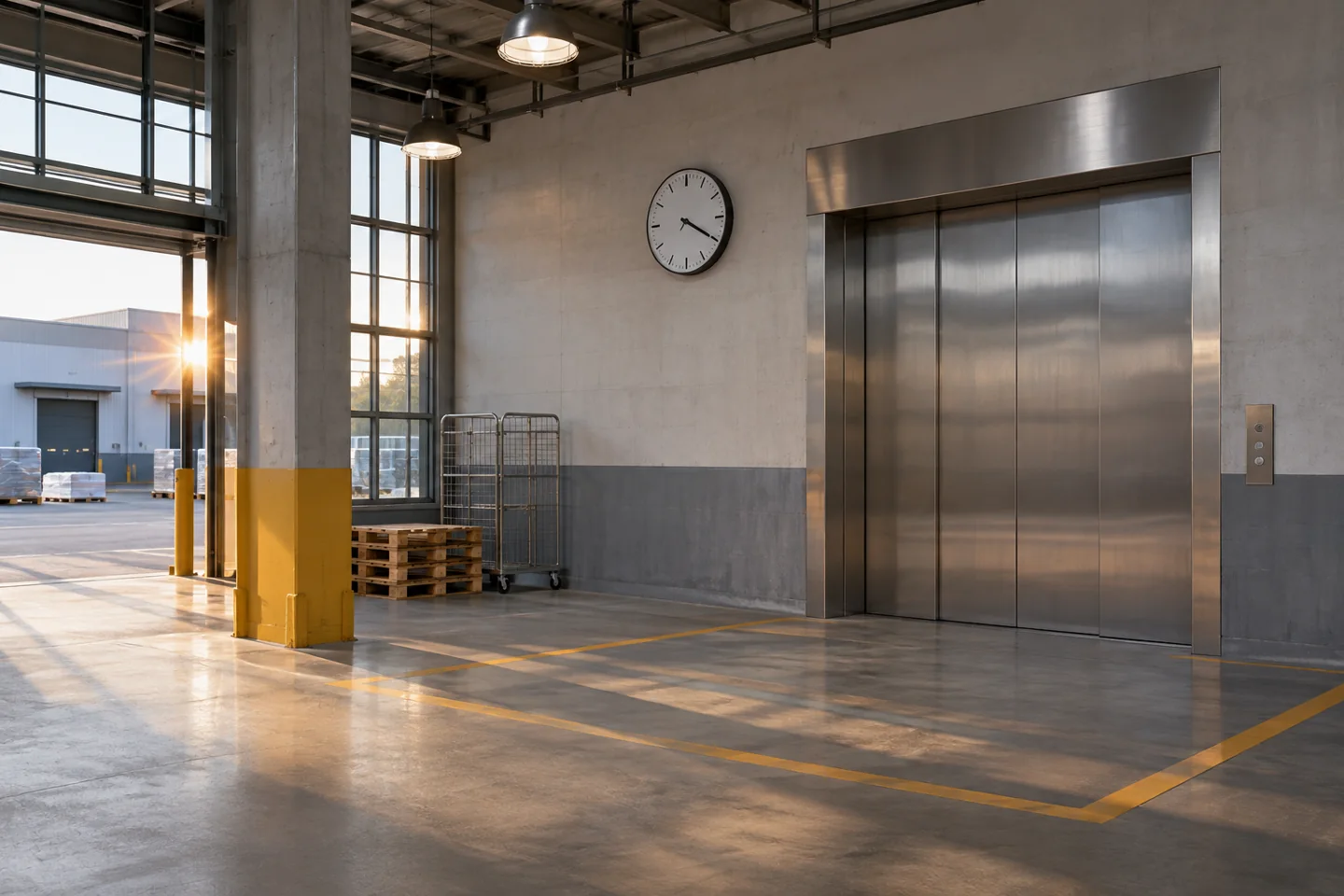
A production timetable and a lift maintenance timetable need to meet in the same plan. Otherwise, a technician arrives to find goods queued at the landing, while dispatch expects the lift to remain available throughout the visit.
Find the service window from actual movements
When planning cargo lift maintenance in Korangi, list the loading periods that matter to your operation: receiving, transfers between floors and dispatch preparation. Use the site's actual schedule. Do not assume a particular shift pattern simply because the building is in an industrial locality.
Discuss the options with the maintenance provider. The quietest production period is not automatically a confirmed attendance slot; availability, access and the work scope still need agreement. Leave space in the plan for a finding that requires a separate decision.
Prepare an operations-to-maintenance handover
Nominate an operations contact who can confirm that loading has stopped under the site's arrangements, explain current complaints and provide authorised access. Technical isolation and equipment work belong with the responsible qualified personnel, not a production supervisor following an online checklist.
Remove the assumption that a booked visit must finish before the next shift. Ask for the expected work window and the process for reporting a delay. A supervisor needs an agreed update point rather than a guessed restoration time.
Give the team a dependency sheet
- Lift number and the floors it serves.
- Confirmed visit window and the person receiving the technician.
- Production or dispatch activity affected by its unavailability.
- Open complaints and outstanding authorised work.
- Who can approve extra work if a defect is found.
- Who receives the completion record and communicates with the next shift.
Keep this sheet separate from technical maintenance instructions. Its purpose is to coordinate the factory, not to prescribe an inspection method or substitute for the equipment's maintenance plan.
Agree the return to operations
Ask the provider to record the work performed, remaining limitations and the authorised service status. Operations staff should receive a clear message before restarting normal loading. An informal “we are leaving” call is not a useful handover if a recommendation or restriction remains open.
If the visit identifies a repair, record whether it is required before use and how the quotation will be approved. Do not allow a production deadline to override the responsible professional's equipment decision.
Review missed windows as a process issue
At the next maintenance review, note whether access was ready, who authorised delays and whether the work record reached the shift team. These are practical improvement points even when the equipment itself had no new fault.
Shinkai can discuss cargo lift servicing and maintenance arrangements for a Korangi property. Provide the operating constraints with the enquiry so the appointment is planned around a real site brief.