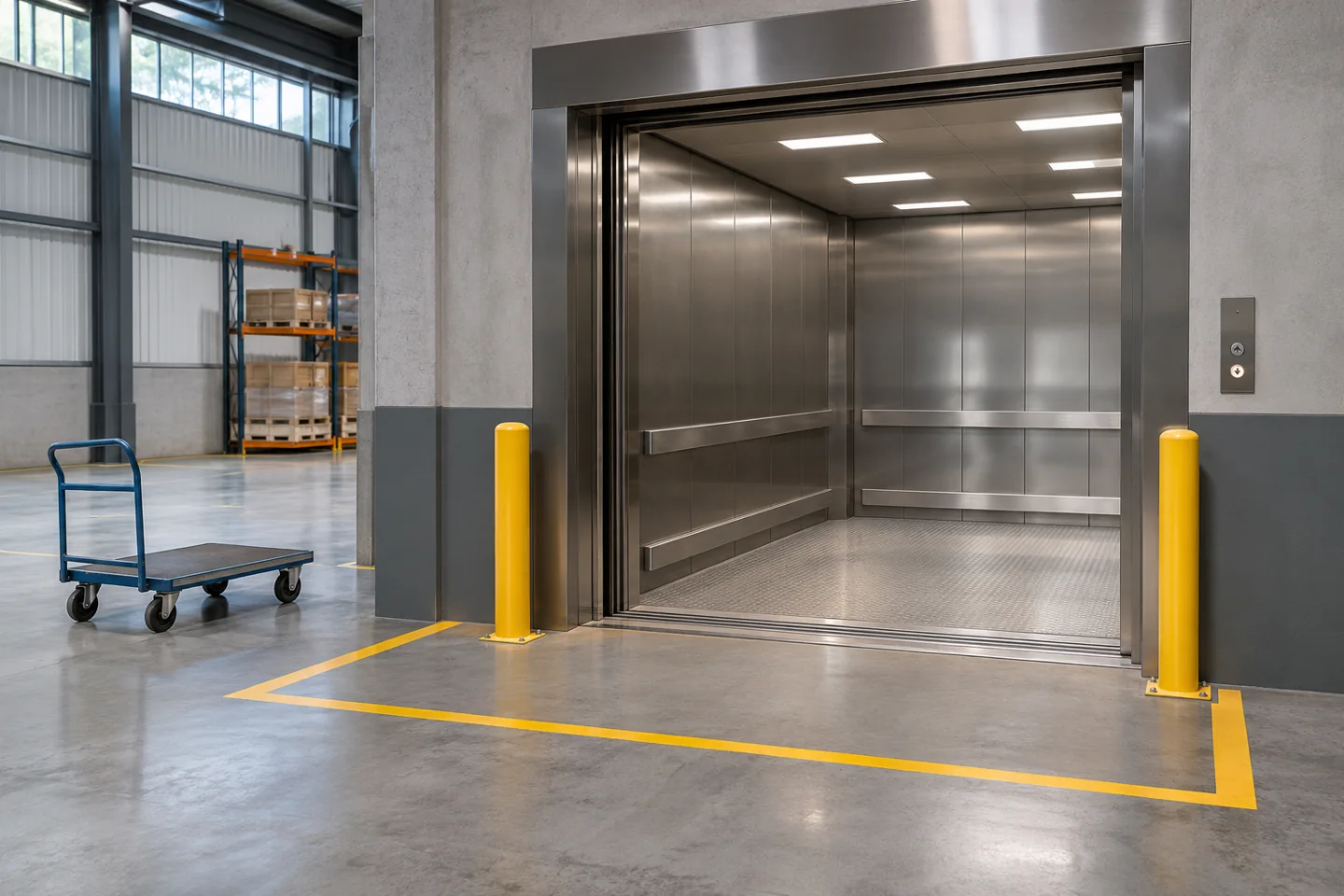
Review the journey to the lift
Cargo lift damage can begin before a trolley reaches the doorway. Walk the permitted loading route with the warehouse supervisor and note tight turns, staging areas and congestion. The purpose is to understand the workflow, not to test the lift with a heavier load.
Record which trolley types are normally used and how goods are handed over between teams. Equipment capacity, permitted loading and suitability for a particular trolley must be confirmed from the installed lift's documentation and the responsible provider. Do not infer capacity from the size of the cabin.
Keep impacts out of routine operation
Treat a reported collision with a door, frame or sill as an incident to document. Note the time, lift identity, visible damage and whether normal operation changed. Do not repeatedly operate damaged doors to prove that the lift still works, and do not attempt an improvised adjustment.
Follow the site's reporting and isolation arrangements where normal use is affected. Ask the service provider to assess the equipment and specify the necessary work or restrictions. A warehouse supervisor can report the event clearly without naming an internal component as the cause.
Assign a loading handover
Agree who controls staging, who moves the trolley and who checks that the approach remains clear. Avoid leaving responsibility split between a driver, storekeeper and casual helper. Use the equipment's approved controls and operating instructions; never hold or obstruct doors with a trolley.
Training should use the actual installed lift and site rules. Goods-only equipment must not become passenger transport simply because riding with a load feels convenient. Changes to guards, barriers or loading arrangements need appropriate review rather than a quick modification by the warehouse team.
Compare damage patterns over time
Keep impact incidents separate from other breakdowns so that a pattern can be identified. If the same approach or shift repeatedly appears in the record, review the workflow with the responsible supervisor. Combine this information with the technician's findings before deciding whether equipment work, training or route changes are needed.
For a Korangi cargo-lift enquiry, send Shinkai the lift type, normal goods-handling arrangement and incident history. The maintenance scope and any proposed changes should follow a site assessment. A better loading process supports equipment care without replacing technical inspection.