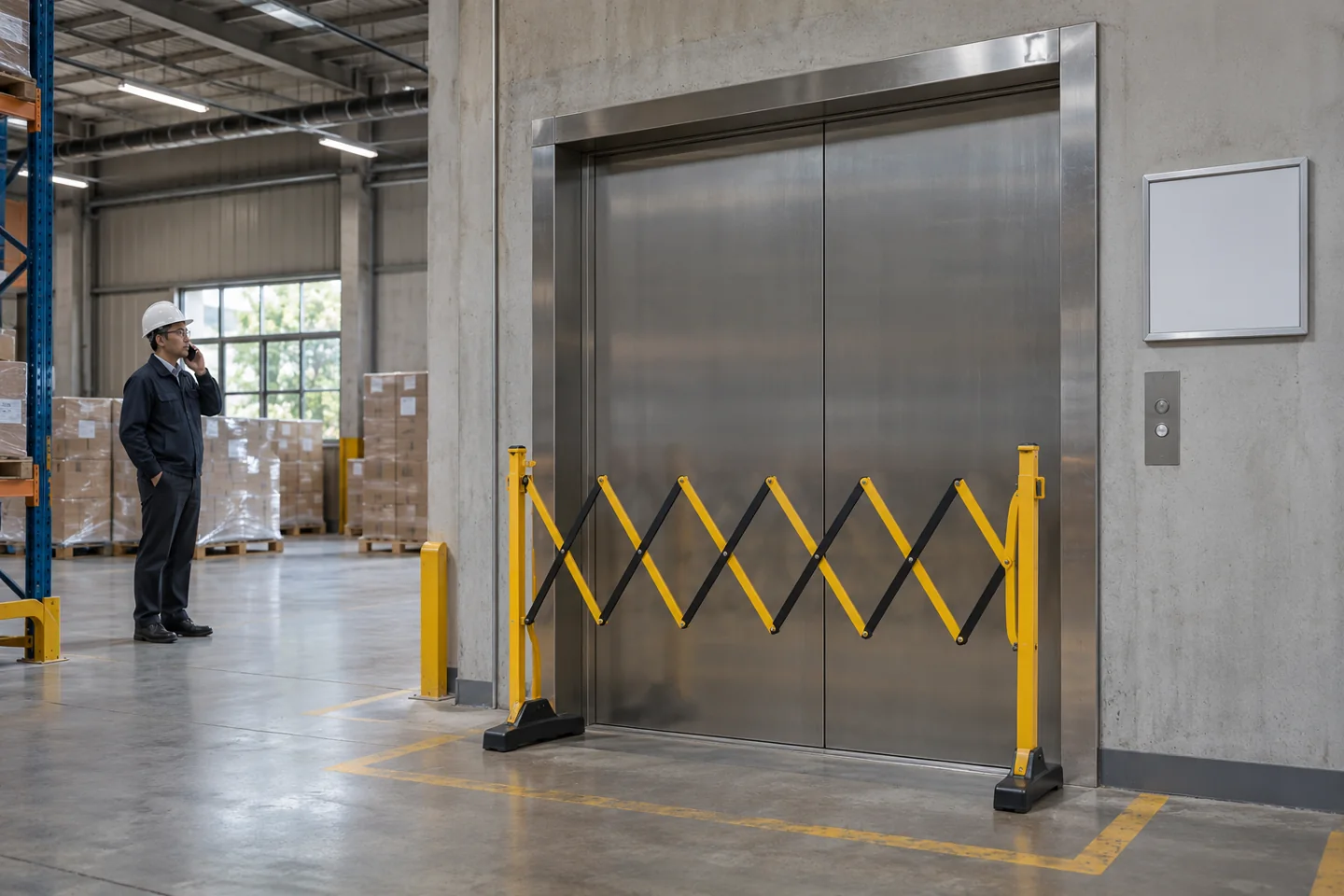
When a goods lift stops, production, stores and dispatch may all need an update. A useful breakdown response assigns one person to coordinate the repair, while each department identifies what work is genuinely affected.
Assign one job owner
For cargo lift repair in SITE Area Karachi, give the service provider a site contact who can coordinate access, existing records and decisions. That person should keep the complaint reference and distribute agreed updates, instead of letting several departments call with different descriptions.
Report the lift's condition from normal accessible positions. Follow the site's emergency arrangements if people are at risk. Do not attempt rescue, enter restricted spaces or have operators reset equipment repeatedly while waiting for attendance.
Describe the operational impact accurately
List the goods movements currently blocked, the next dispatch dependency and any alternative already permitted under the site's operating arrangements. Do not assume another lift can take the load simply because it is available. Its rated use, dimensions and approved handling process still apply.
Share relevant urgency with the provider without converting it into an unconfirmed restoration promise. An urgent production requirement cannot remove the time needed for assessment, compatible parts or completion checks.
Use a status board with separate milestones
| Milestone | Record |
|---|---|
| Reported | Time, symptom, lift identity and reporting contact. |
| Attendance arranged | Confirmed arrangement and site access contact. |
| Assessed | Findings, restrictions and proposed next action. |
| Approved work | Accepted scope, decision owner and dependencies. |
| Returned to service | Provider's completion record and operations notification. |
Keep these milestones distinct. A technician attending is not the same as completing a repair, and a supplier dispatching a component is not the same as the lift being ready for use.
Remove avoidable decision delays
Make an authorised manager available to review the assessed proposal. Ask for the work scope, parts basis, commercial terms and expected next update. If the repair depends on building access or another contractor, assign that dependency rather than leaving the lift team to coordinate it informally.
Where a part is unavailable, request an explanation of the available professionally assessed options. Staff should not substitute an unverified component to meet a dispatch target.
Review the interruption after restoration
Record what caused the operational delay: diagnosis, approval, access, procurement or the repair itself. This helps management decide whether the next improvement belongs in equipment work, maintenance planning or its own response process.
For SITE Area properties, Shinkai's cargo lift services can be discussed alongside the operating constraints. Keep the completed job linked to the equipment history so the next fault does not begin with missing information.