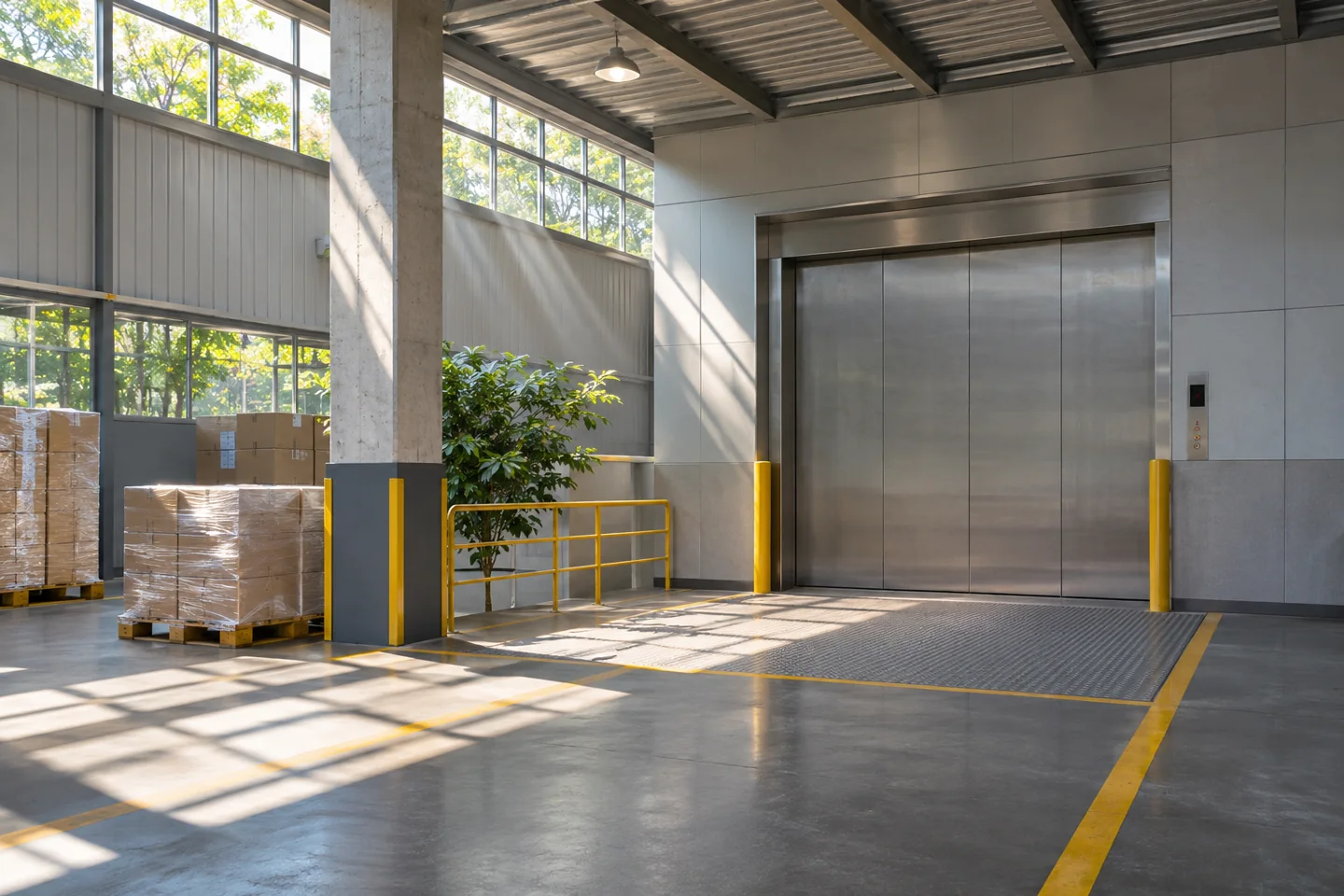
The environment around a cargo lift belongs in the maintenance discussion. Dust-producing work, nearby wash-down activities, stored materials and building leaks can create different concerns, so the provider needs a description of the actual site rather than a generic industrial label.
Describe the exposure without assuming a diagnosis
When arranging cargo lift maintenance in SITE Area, explain what happens near the lift: the goods handled, nearby processes, loading frequency and any reported water or debris incident. Do not assume every SITE Area property has the same environment or requires an identical visit schedule.
Use ordinary observations and existing workplace records. Staff should not open equipment or enter restricted spaces to decide whether dust or moisture has reached a component. The responsible professional must determine what inspection and action are needed.
Agree the housekeeping boundary
Ask the provider to distinguish surfaces that site cleaners may attend under written instructions from equipment areas reserved for authorised maintenance personnel. A cleaner should not have to guess whether an opening is safe to reach into or whether a product can be used on equipment.
Include the normal landing approach in the site's housekeeping plan. Keep storage and waste from taking over the usable route. Do not direct water, cleaning chemicals or compressed air into lift mechanisms, or improvise a cleaning method for a restricted area.
Coordinate building-side causes
If a roof leak, plumbing route or neighbouring activity may be affecting the installation, record it and assign the appropriate building professional. Equipment maintenance and correcting a source outside the lift can be separate scopes with different responsible parties.
Ask the lift provider to explain any dependency before a planned visit. Treat a suspected environmental contribution as something to assess, not proof that a contractor or operator caused a fault.
Match the service plan to the assessment
- Identify the lift and the environment described in the initial brief.
- Agree authorised access and any workplace coordination required for the visit.
- Record the provider's recommended tasks and visit arrangements.
- Assign building-side actions separately from equipment work.
- Track findings that need repair approval rather than leaving them as repeated notes.
Do not select a service frequency from an online rule for all factories. The equipment, condition, usage, documentation and professional assessment should inform the agreed maintenance plan.
Look for patterns across visits
At review, compare the location and timing of repeated findings with the site's activities. Has an agreed building repair been completed? Did the maintenance team obtain the access it needed? Is an outstanding defect being reported every visit without an owner?
For a SITE Area enquiry, Shinkai can discuss cargo lift maintenance with the site's responsible team. A specific environment brief helps establish the assessment scope without claiming a diagnosis before inspection.