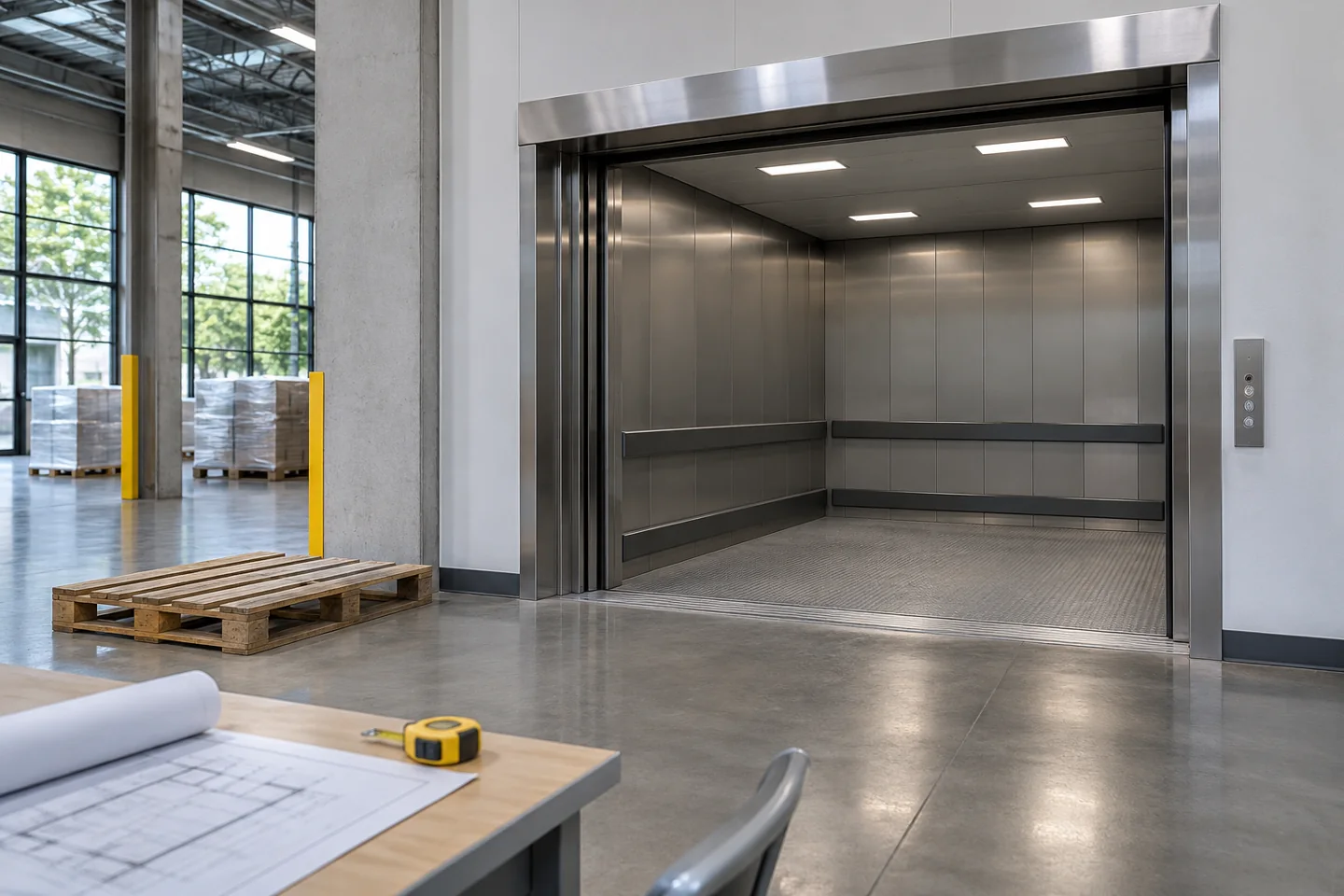
A cargo lift can have sufficient rated capacity and still be unsuitable for a site’s working process. The goods must fit, the approach must work and the loading method must match the equipment’s intended use.
Describe a complete movement
Start with representative loads: their mass, dimensions, packaging and how they reach each landing. Include the trolley or handling equipment in the assessment. Record the largest normal item and any occasional exceptional item separately; an average carton does not describe the full requirement.
Provide existing rated-load information to the lift professional. Do not infer permission for concentrated loads, trolley impacts or people to travel from the headline kilogram rating. The installation’s documentation and intended use govern what can be proposed.
Map the route outside the cabin
Measure or arrange a survey of the approach, turning area, door opening and destination space. A load that fits inside may still be unable to turn through a corridor. Keep pedestrian circulation and waiting goods in the layout review so stored stock does not obstruct a landing.
- Origin and destination of each common movement.
- Load and trolley dimensions, including handles.
- Door and approach constraints at every served floor.
- Peak movement periods and waiting space.
- Who loads, unloads and supervises the operation.
Compare equipment on the same brief
Ask suppliers to identify the proposed lift category, permitted use, rated load, clear openings and loading assumptions. Clarify whether a proposal is goods-only or allows an attendant under its specified design. Labels such as “cargo”, “freight” and “goods lift” should not replace this written clarification.
Include building work, electrical supply, protective finishes, landing arrangements and maintenance access in the quotation. Record which party provides each item. Loading frequency and the working environment should be part of the equipment selection discussion, rather than added after ordering.
Plan the operating handover
Request equipment-specific operating instructions, clear identification of rated use and training arrangements for authorised staff. Agree how unusual loads and damage reports will be escalated. Operators should never modify interlocks or use a goods-only installation to carry passengers.
For a Karachi warehouse, factory or commercial property, send Shinkai a load schedule and simple route sketch. These help start a site assessment; final suitability requires the actual building and equipment to be evaluated.