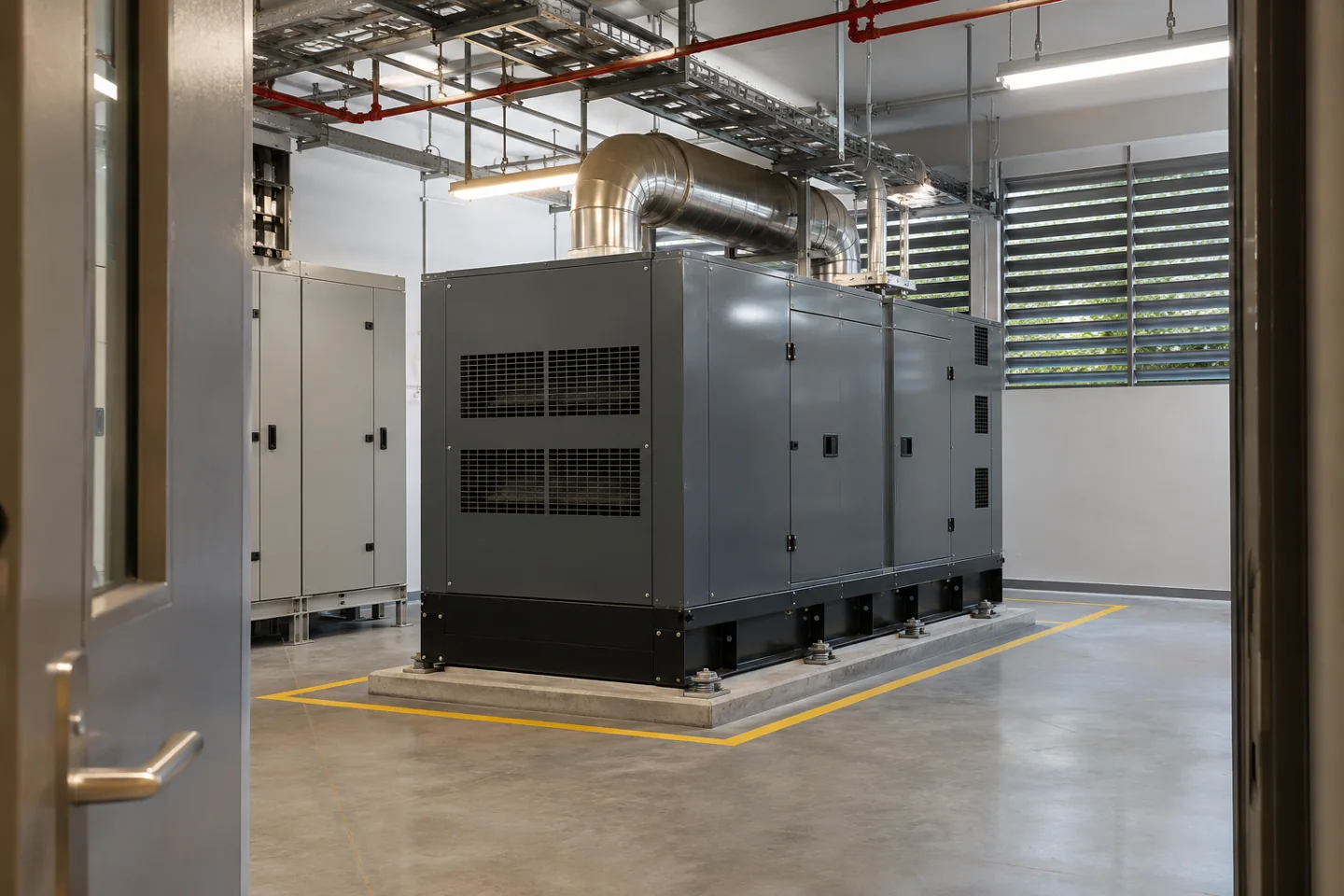
A lift described as having “backup” may provide a controlled rescue movement, limited standby operation or another equipment-specific function. Before planning around power interruptions, establish exactly what the installed arrangement does.
Ask which function is included
Automatic rescue equipment and a building generator are different systems. Manufacturer guidance describes rescue arrangements that use standby power to move a compatible lift to a landing and open the doors. That does not establish that every lift can continue normal journeys on a small battery.
Request the documentation for the actual equipment. Record what happens when supply fails, what functions remain available and what must happen before normal service resumes. Do not assume another building’s arrangement applies to yours.
Coordinate the lift and electrical design
Ask the lift provider and a qualified electrical professional to agree the supply requirements, transfer arrangements, earthing, protective equipment and any restrictions on simultaneous lift operation. A generator’s headline capacity is not enough to establish compatibility.
Include emergency lighting, communication equipment and the building’s wider priorities in the discussion. A supply plan should account for essential loads and the sequence in which equipment returns, rather than simply listing the lift motor rating.
Use a procurement checklist
- Which lift models and controllers are compatible with the proposed arrangement?
- What is its intended function and what is explicitly excluded?
- Who designs and supplies each interface?
- What inspection, maintenance and replacement obligations apply?
- How will acceptance be demonstrated and documented?
- Who receives a fault report if the backup arrangement does not behave as documented?
Request written responsibilities before purchasing components. A battery, drive or control modification selected without compatibility checks may not deliver the function management expects.
Keep operational instructions accessible
Site personnel need a clear escalation plan and equipment-specific instructions from the responsible professionals. They should not improvise switching, rescue or restart procedures. A backup system also needs recorded attention over its life; installation alone is not evidence of continuing readiness.
For a Karachi project, Shinkai can discuss the lift side of a coordinated assessment. Share the equipment details and existing supply documentation. Confirm the proposed function, scope and acceptance process in the quotation so occupants receive an accurate description of the service available during an interruption.