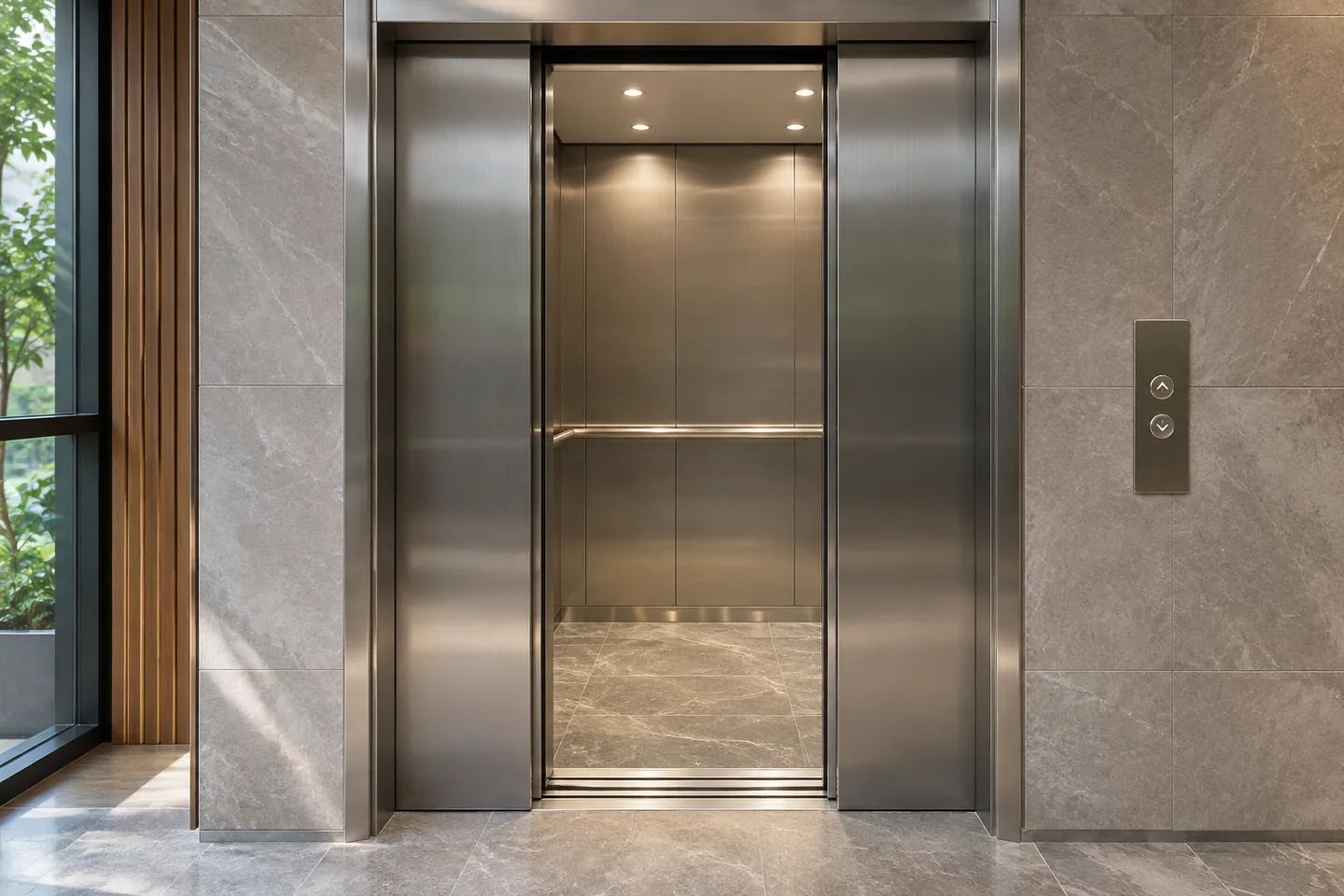
Repeated door reopening delays journeys and often leads occupants to improvise. A better response is to record the pattern and arrange an assessment. The visible symptom alone cannot identify whether the cause involves an obstruction, detection equipment, alignment or another part of the door system.
Describe the pattern at the landing
Note whether the problem occurs on one floor or every floor, during busy periods or even when the entrance is clear. Record whether the doors partly close, close fully and reopen, or remain open without moving. These are different observations and should not be reduced to “door sensor broken”.
Use existing public displays and normal passenger areas for observations. A short video can help if it can be taken without standing in the doorway, delaying other passengers or exposing their personal information. Report the approximate time so a technician can relate it to equipment records where available.
Keep the entrance usable
Move normal luggage or deliveries away from the approach without reaching into tracks or mechanisms. Use the designated door-open control when boarding requires more time. Schindler’s rider guidance advises passengers not to stop a closing door with their body or an object.
Do not tape over sensors, wedge the doors, alter settings or operate restricted controls. If the lift cannot be used normally, notify building management and follow the site’s out-of-service arrangements. Do not keep testing it with passengers to demonstrate the fault.
Give the technician a useful report
- Lift identity and affected floor.
- Door behaviour and time of occurrence.
- Whether the entrance was visibly clear.
- Any displayed message visible from a normal passenger position.
- Recent deliveries, building work or a previously reported door complaint.
Ask the service team to record its findings, proposed corrective work and completion checks. An explanation should connect the observed fault with the work performed; a part number by itself does not explain why replacement was justified.
Check whether the complaint returns
After the authorised return to service, record subsequent complaints by floor and time. A recurrence should refer to the previous job number, while leaving the diagnosis open. Similar symptoms can have different causes, and changing another component without reviewing the earlier findings may leave the underlying issue unresolved.
For a Karachi repair enquiry, share this observation record with Shinkai. Confirm visit arrangements directly; an online message does not establish a guaranteed arrival time.