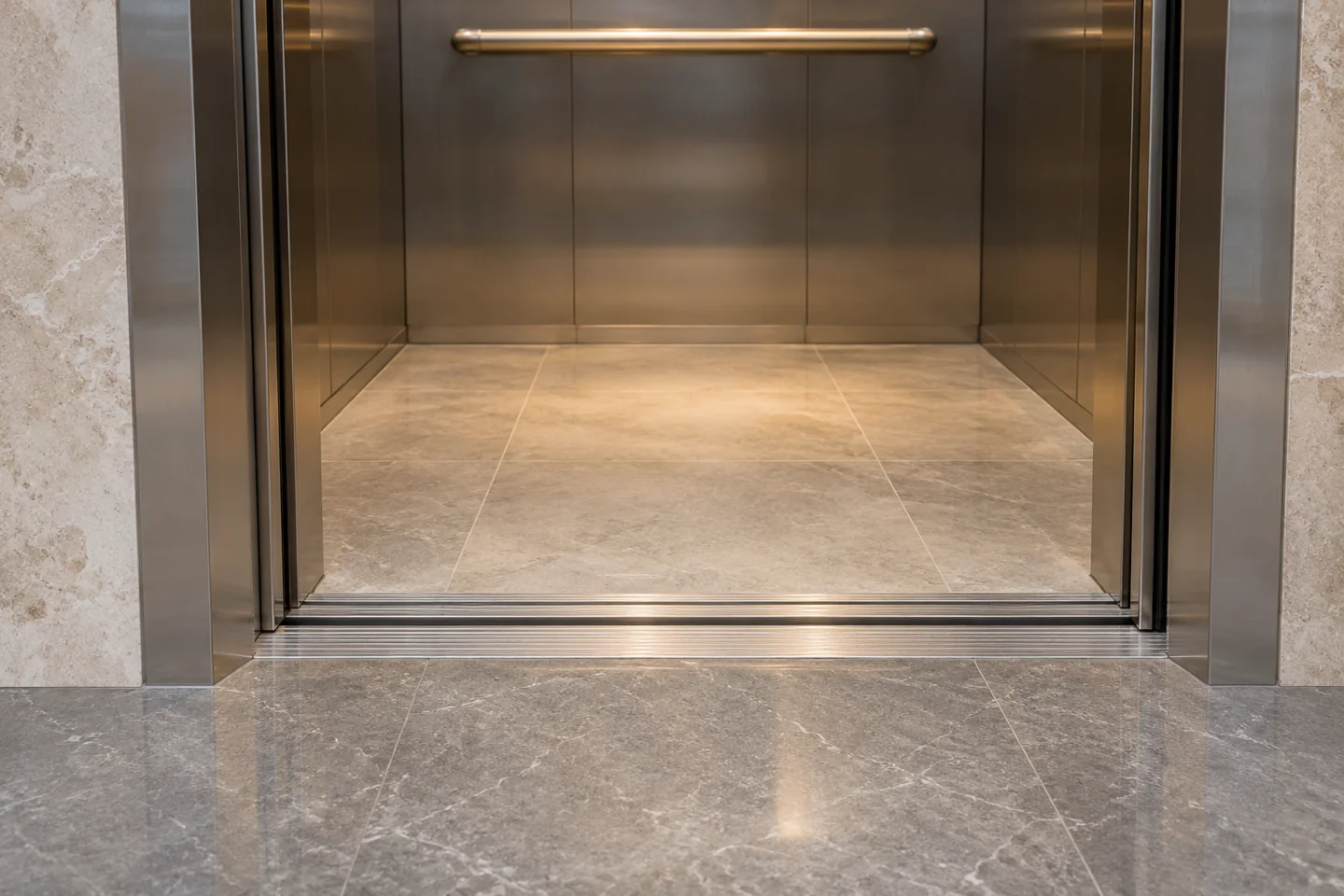
A cabin floor that stops above or below the landing creates a difficult transition, particularly for wheelchair users, people with walking aids and anyone moving a trolley. Treat the observation as a service issue rather than asking passengers to compensate for it.
Respond to the visible condition
Inform building management and the lift service provider. Follow the building’s arrangements for restricting use when normal boarding is unsafe, and provide an alternative route or assistance plan suited to the occupants. Do not encourage someone to cross a gap simply to see whether the cabin settles.
No universal acceptable difference is given here. Applicable requirements depend on the installation and jurisdiction, and assessment needs a qualified professional. A photograph is evidence of a reported condition, not a compliance certificate.
Record where and when it occurs
State the affected floor, direction of arrival if known and whether the cabin appears high or low. Note whether the report is occasional or persistent. Use information already available from normal use; do not load the cabin deliberately, repeat journeys or enter restricted areas to reproduce the problem.
Example report: Lift B appeared below the second-floor landing at approximately 10:20. The building contact has reported a similar complaint twice this week. No cause has been confirmed. Please assess and advise the return-to-service conditions.
Keep observations separate from assumptions about brakes, sensors or the controller. Component names may sound precise while sending an assessment in the wrong direction.
Ask for a documented assessment
The service team should identify the equipment, explain the finding and describe the proposed work and checks. Ask whether the complaint requires immediate restriction, what access is needed and whether any follow-up remains outstanding. Site staff should not make adjustments or repeatedly reset the equipment.
If a quotation is needed, request a scope tied to the finding, with parts specification, labour, expected disruption and exclusions. Ask how completion will be recorded and who authorises normal operation.
Close the loop with occupants
After an authorised return to service, tell occupants how to report a recurrence and identify the affected lift clearly. Retain the complaint, assessment and work record together. If the building depends on one lift, review access needs during downtime in advance, rather than leaving each affected resident to make separate arrangements.
Shinkai can discuss assessment arrangements for Karachi properties. Send the building location and the recorded landing complaint when making an enquiry.