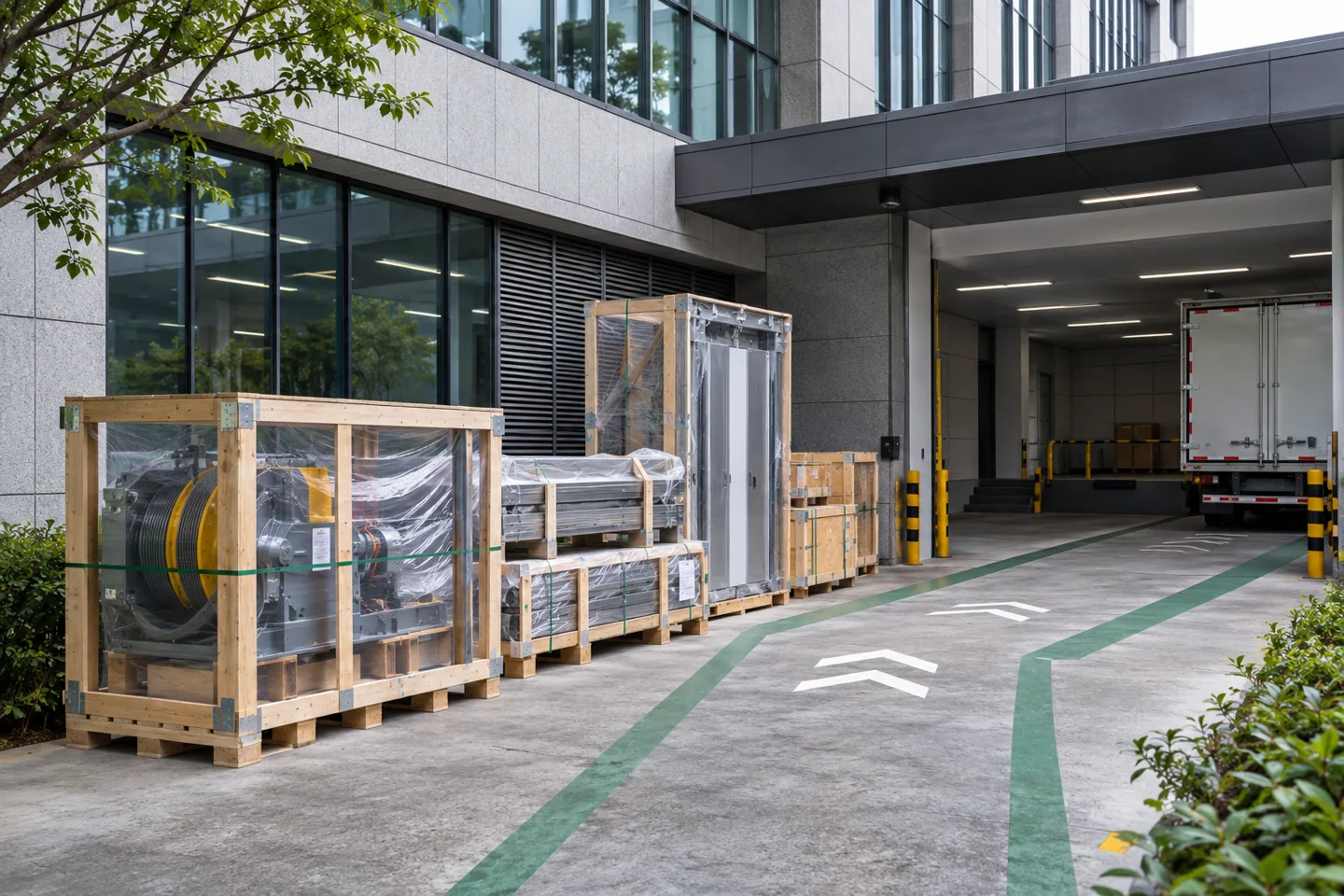
Map the full route, not only the front gate
A delivery address does not describe how lift equipment reaches the work area. The project team needs to understand the route from the vehicle’s arrival point to the agreed storage and installation locations. In an occupied Karachi building, this route may cross shared access used by residents, customers or other contractors.
Prepare photographs and a marked plan for discussion with the installer. Record gates, turns, level changes, loading areas and access restrictions. Measurements and any handling or lifting arrangements must be confirmed by the responsible professionals; photographs and approximate dimensions are a starting brief, not a handling plan.
Assign each part of delivery to an owner
Ask the proposal to identify who arranges transport, unloading, movement within the site and temporary storage. Clarify who coordinates with building security and who can approve a change on delivery day. A shared task without a named owner is an avoidable source of delay.
If specialist equipment, temporary protection or an alteration to an access route is proposed, obtain the appropriate assessment and written arrangements before the delivery. Building staff should not improvise the movement of heavy equipment because a vehicle has already arrived.
Treat storage as part of the installation plan
Agree where equipment will be kept, who controls access and how delivery records will be checked. The selected location and protection arrangements should follow the supplier’s requirements. Ask how damage, missing packages or discrepancies will be recorded and reported.
Keep the accepted equipment schedule, delivery note and any discrepancy report together. Receipt of packages should not be confused with acceptance of a completed lift installation. Those are separate milestones with different checks and documentation.
Hold a pre-delivery readiness review
Before dispatch, review site access, the agreed work areas, building preparation responsibilities and the installer’s stated prerequisites. Confirm delivery contacts and the procedure for an unexpected obstruction or unavailable access. Record which open items could prevent delivery or installation from proceeding.
In a building with tenants, publish a practical notice about the affected route and agreed delivery period. Coordinate essential access with management rather than making a blanket assumption that every entrance can close. If the schedule changes, use one approved update so security, the delivery team and occupants receive consistent information.