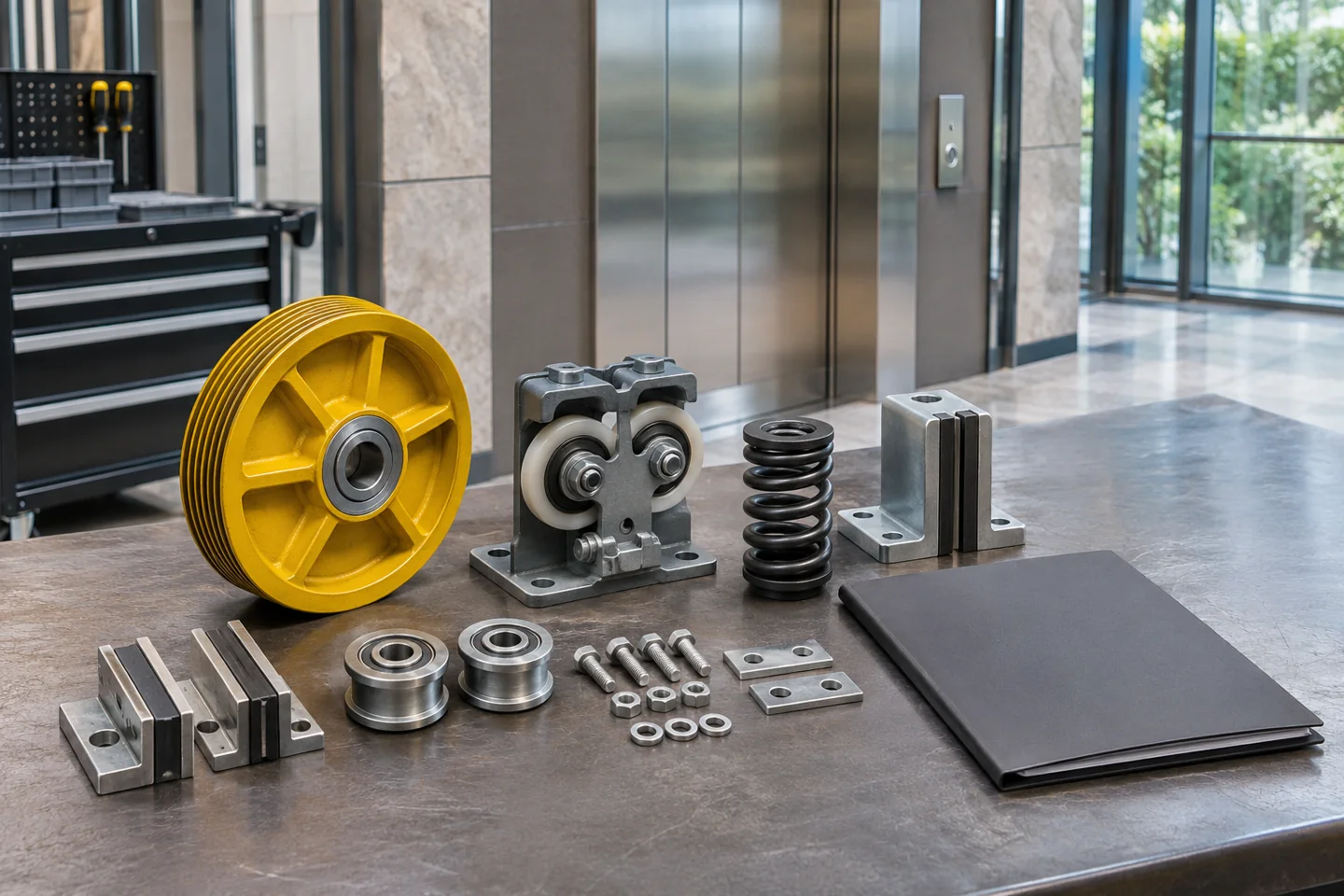
A replacement part is useful only if it fits the assessed fault and the installed system. Comparing two quotations by the component name and price can hide differences in compatibility, included work and responsibility.
Connect the part to a documented finding
Ask for the lift identity, the diagnosed issue and the proposed component reference or compatible specification. Where identification requires restricted equipment access, the service professional should collect it. Building staff should not remove covers to read labels for an online seller.
A symptom such as intermittent stopping does not, on its own, establish that a drive or control board needs replacing. The assessment should explain why the part is proposed and what uncertainty remains.
Compare like-for-like quotations
- Manufacturer or supplier identification and exact specification.
- Whether the item is new, refurbished or repaired.
- Quantity, accessories and interfaces included.
- Installation, configuration and completion checks.
- Delivery assumptions and any return visit.
- Warranty terms and exclusions for the specific supply.
Terms such as “original”, “equivalent” and “universal” need clarification. Ask who accepts responsibility for compatibility with the existing equipment. An alternative may require additional work that changes the apparent price advantage.
Make the commercial conditions visible
Record taxes, transport, payment milestones, quotation validity and expected lead time. Clarify whether the old part is returned, retained or exchanged, and whether any exchange value has already been included. Do not approve a headline amount while leaving these conditions unresolved.
If the equipment must remain unavailable while awaiting parts, ask the provider to explain the restriction and expected next update. Distinguish a supplier’s dispatch estimate from an agreed completion date at the building.
Keep a traceable replacement record
At completion, retain the work sheet, installed component details, invoice and warranty information. Ask what checks were performed and whether any further corrective recommendations remain. Link the record to the original complaint so a future assessment can see the sequence.
For a Karachi repair enquiry, Shinkai can discuss assessment and a scope-based quotation. Supply existing records and photographs from ordinary accessible areas only. Do not order a safety-critical component solely because it resembles a picture online.